
Make the business story clear
Profile and Pitch Deck Design
A company profile and a pitch deck both introduce a business, but they need to do different jobs. One may be read quietly by a prospective client; the other may support a live conversation with investors or partners. We design profiles, sales decks and presentations around the audience, the message and the decision the material needs to support.
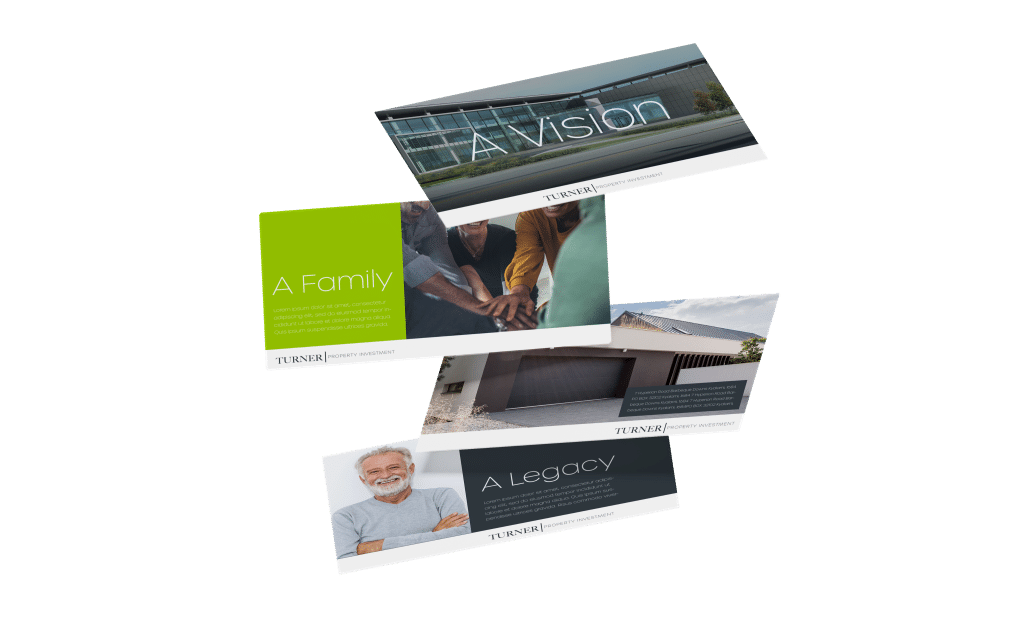
At a glance
A clear starting point
The strongest starting point is a clear story with evidence behind it. Design then helps people follow the argument, understand the information and recognise the next step without having to work through a crowded document.
- Choose the right document Distinguish a company introduction, sales presentation and investor pitch before planning pages.
- Give evidence a clear role Use relevant work, facts and approved figures to support the business story.
- Plan how it will be used Agree live presentation, PDF, print and editable-file needs at the start.
Explore this service
Our approach
What we do
Document purpose and narrative structure
We clarify what the reader should understand and which questions the material needs to answer. A company profile may emphasise capability, services and relevant projects. A sales deck may follow a particular customer problem. An investor presentation needs its own approved business and financial content, supplied by the people responsible for it.
Content hierarchy and page flow
We organise the agreed content into a readable sequence, giving important messages space and grouping supporting detail where it belongs. Long paragraphs, repeated claims and unrelated imagery can make a document harder to follow. The page plan helps identify gaps before detailed design begins.
Branded presentation design
Typography, colour, imagery and layout should carry your identity consistently while responding to the material. A product showcase needs a different balance from a service overview or team introduction. We design the visual treatment around the content, rather than forcing every page into the same arrangement.
Charts, diagrams and evidence presentation
Approved figures and project information need context as well as visual clarity. Supply the source, reporting period and explanation for any data. We can discuss how to present it in the agreed design scope; the underlying business claims and calculations remain subject to your approval.
Reusable layouts and distribution formats
If your team will regularly update the deck, that editing requirement belongs in the brief. Agree the authoring format, templates and final outputs before design starts. A live presentation, emailed PDF and printed profile need different checks for readability, file size, links and production.
Clear steps. Direct collaboration.
How we work
01
Define the audience and use
Explain who will receive the material and whether it will be presented, read independently or printed. Share the business objective and the action you want to follow so the structure serves a clear purpose.
02
Agree the story and evidence
Gather the approved copy, project examples and figures. Create a page or slide outline, resolve missing information and confirm which claims have an accountable owner before detailed layouts are developed.
03
Design and refine
Apply the visual direction to representative pages, then the agreed document. Review the flow as a whole as well as individual slides. Consolidated feedback helps keep the story consistent across stakeholders.
04
Prepare the final versions
Check names, numbers, links and presentation order against the approved content. Prepare the agreed outputs and clarify how future changes will be made, especially where the document includes templates for your team.
See the work
Experience you can explore
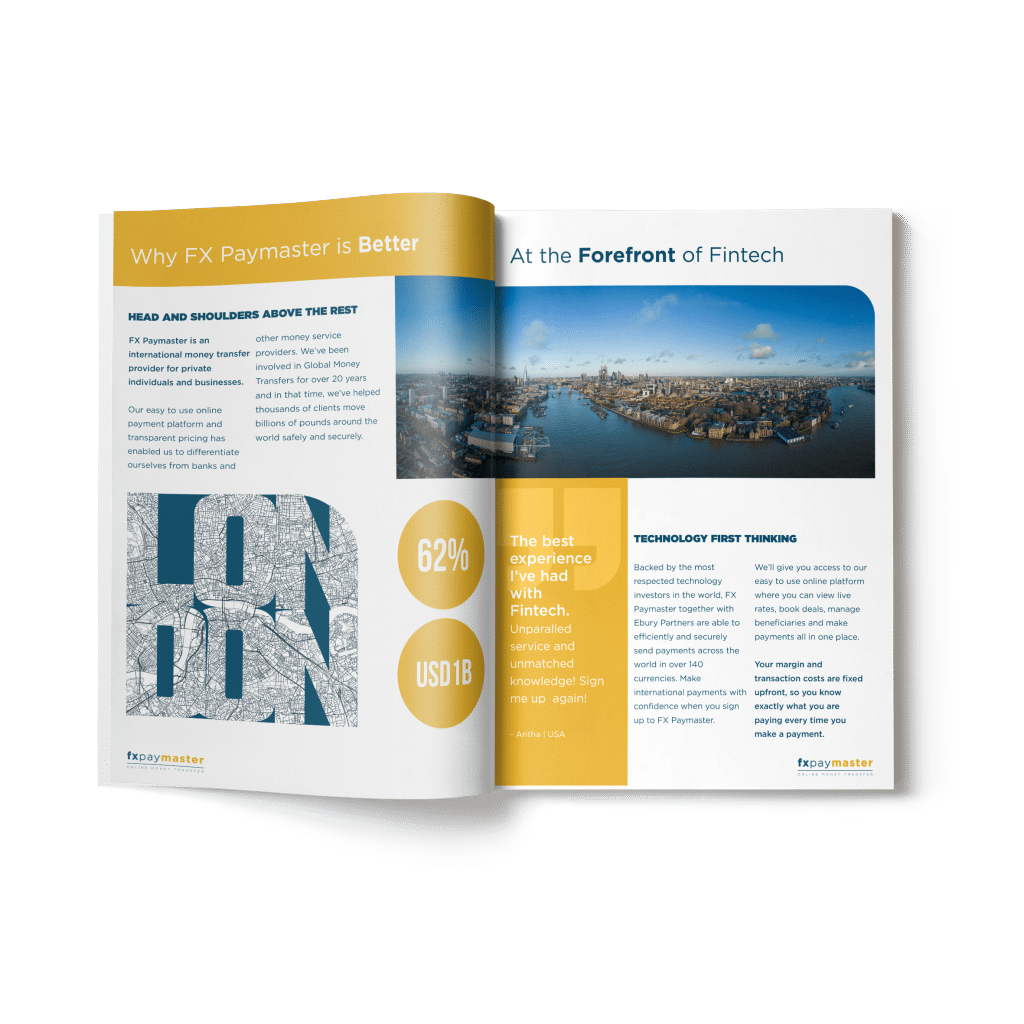
Company-profile design example. Figures and quotations shown form part of the original artwork.
FX Paymaster: company profile design
Project scope. A company profile for a forex business, combining the document content with graphics and a coordinated layout.
Our contribution. Simply Graphic designed the company profile. The displayed spread shows the page layout, visual hierarchy and supporting graphic treatment.
Design decisions. Large headings introduce the topics, with shorter text columns for the detail. Blue and yellow connect the spread, while photography and graphic panels create distinct levels of information.
Delivered design. The delivered company-profile design gives the business information consistent visual treatment and a clear separation between the main messages and supporting detail.
Headwear24 company profile
The Headwear24 profile uses product imagery, bold typography and dynamic layouts to present the business. It offers a relevant reference for a profile with a strong visual product story.
FX Paymaster company profile
Explore how graphics, content and a modern layout were brought together in the FX Paymaster profile.
Make the first conversation useful
What to bring to your brief
- Audience, purpose and intended next step.
- Current document or a rough page/slide outline.
- Approved business information, figures and evidence sources.
- Brand files, project imagery and image-use permissions.
- Required authoring format, distribution methods and approval contact.
Useful resources
Plan the next step
Company profile design guide
Build a useful outline and select evidence that answers buyer questions.
Pitch deck design brief
Clarify the audience, story, data and delivery format before slide design.
Meet the team behind the work and see how we collaborate with clients in South Africa and internationally.
Before you start
Your questions, answered
Choose based on the conversation. A profile provides a broader introduction to the business and its capability. A pitch deck usually supports a specific proposition and decision. Sometimes both are useful, but each should have its own structure rather than simply sharing every page.
Yes. Share the current file, the audience and what is not working. Explain whether the content is approved or needs restructuring, and whether your team needs to keep editing the document after handover.
The authoring format and editable-file requirements should be agreed before design. Tell us which software the team uses and what they will change most often. Templates and guidance can then be considered as part of the handover scope.
Your team supplies and approves financial figures, customer claims, credentials and other business facts. Design helps present that information clearly; it does not establish its accuracy or guarantee investment, sales or procurement decisions.
Your next step
Give your presentation a clear purpose
Send the current document or outline, the audience and how you will use it. We can discuss the structure and design support that will make it easier to present.